United States Flag (1860)

United States Flag (1860)

Manifest Destiny

Manifest Destiny

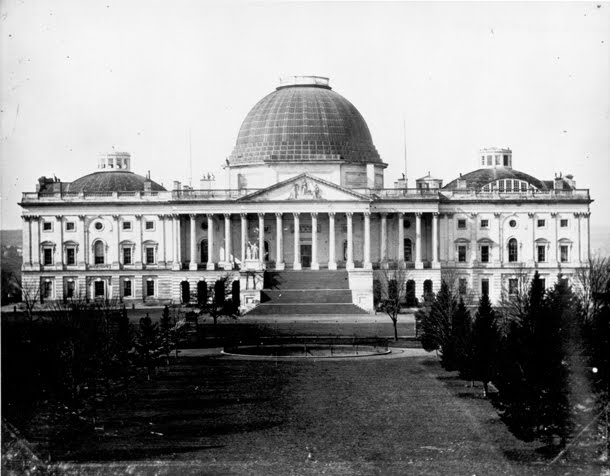
United States Capitol Building (1861)

United States Capitol Building (1861)

The Promised Land

The Promised Land

The United States Capitol Building

The United States Capitol Building

The Star Spangled Banner (1812)

The Star Spangled Banner (1812)

The United States Capitol Building

The United States Capitol Building

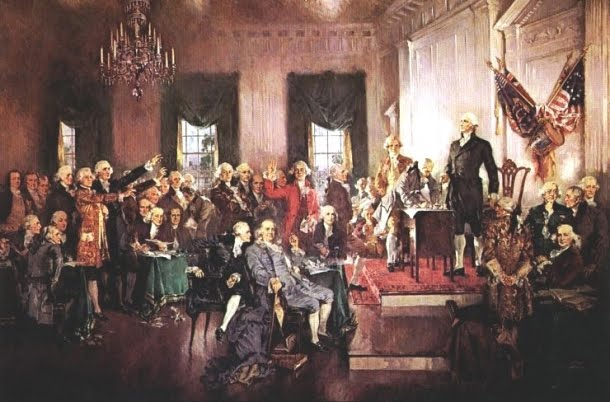
The Constitutional Convention

The Constitutional Convention

The Betsy Ross Flag

The Betsy Ross Flag

Washington at Valley Forge

Washington at Valley Forge

Washington at Valley Forge

Washington at Valley Forge

Washington at Valley Forge

Washington at Valley Forge

The Culpepper Flag

The Culpepper Flag

Battles of Lexington and Concord

Battles of Lexington and Concord

The Gadsden Flag

The Gadsden Flag

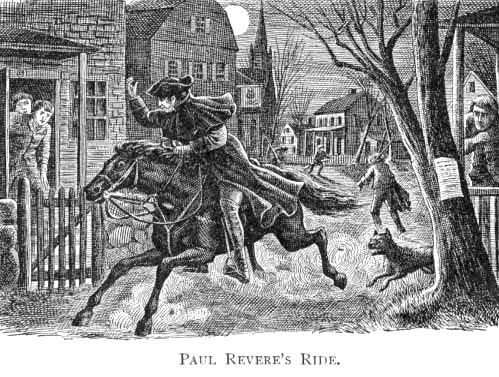
Paul Revere's Midnight Ride

Paul Revere's Midnight Ride

The Grand Union Flag (Continental Colors)

The Grand Union Flag (Continental Colors)

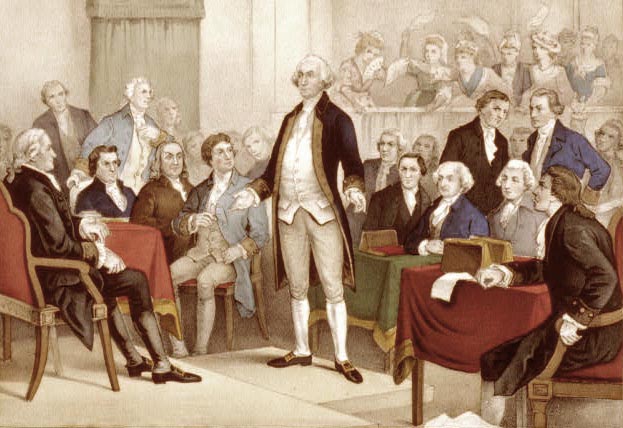
The Continental Congress

The Continental Congress

Sons of Liberty Flag (Version 2)

Sons of Liberty Flag (Version 2)

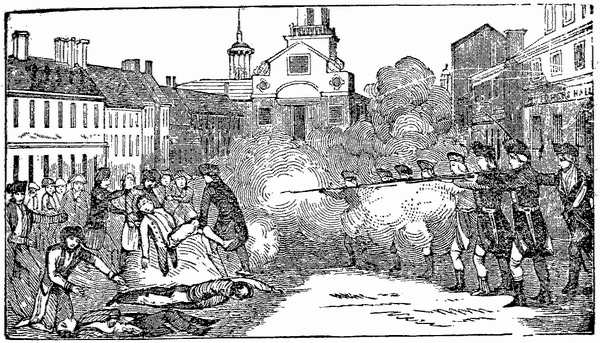
The Boston Massacre

The Boston Massacre

The Sons of Liberty Flag (Version 1)

The Sons of Liberty Flag (Version 1)

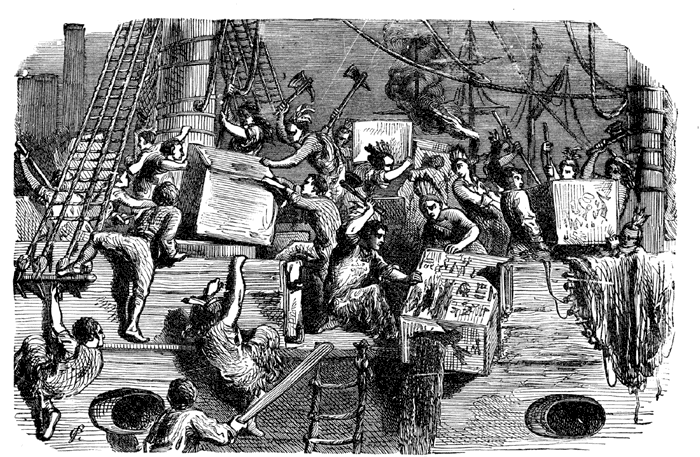
The Boston Tea Party

The Boston Tea Party

Thursday, March 3, 2011

The Constitution In Ninety Days: 4 March

From Constituting America:

March 4, 2011 - Article I, Section 3, Clauses 6-7


6. The Senate shall have the sole Power to try all Impeachments. When sitting for that Purpose, they shall be on Oath or Affirmation. When the President of the United States is tried, the Chief Justice shall preside: And no Person shall be convicted without the Concurrence of two thirds of the Members present.


7: Judgment in Cases of impeachment shall not extend further than to removal from Office, and disqualification to hold and enjoy any Office of honor, Trust or Profit under the United States: but the Party convicted shall nevertheless be liable and subject to Indictment, Trial, Judgment and Punishment, according to Law.


Will The Senate Ever Vote On Goodwin Liu?

From ADF and Politico:


Will Senate ever vote on Goodwin Liu?

Goodwin Liu takes a seat on Capitol Hill. | AP Photo

Liu has captured the hopes of liberals who see him as a bold judicial pick.
AP Photo

CloseBy ABBY PHILLIP
3/3/11 12:40 AM EST

President Barack Obama’s most controversial judicial nominee, Goodwin Liu, has been waiting for more than a year for his nomination to be voted on by the Senate after Republicans deemed him to be too inexperienced and controversial to be a federal appeals court judge.


This spring, Senate Majority Leader Harry Reid has assured Liu’s backers, he intends to push for a vote.


Continue Reading Text Size

-+reset Listen Latest on POLITICO

Trump: Ready for Iowa hand-shaking

Michelle Obama reads to schoolkids

Democratic Senators ditch 2012 runs

Counteroffer in budget talks

Huck rips Portman's pregnancy

Wilson to announce for Senate

POLITICO 44

Though the Senate Judiciary Committee is likely to endorse the nomination of the University of California at Berkeley law professor in the next few weeks, Republicans who accuse Liu of judicial activism are almost certain to filibuster his nomination to the 9th circuit court of appeals when it reaches the Senate floor. His chances of confirmation - whatever Reid’s efforts - appear as slim as they were last year.


“We will have to work very, very hard on his behalf and I know that Goodwin Liu is intending to meet with every senator that he can,” said Rep. Judy Chu (D-Calif.), chair of the Congressional Asian Pacific American Caucus. “I hope that through his one to one meetings people will see how reasonable and measured he is, and he can get enough support so that he can break through cloture.”


Liu, 39, has captured the hopes of liberals who see him as one of Obama’s few bold judicial picks, someone with the intellect and youth for the circuit court bench, a traditional stepping stone to the Supreme Court. But Republicans have argued that he lacks any judicial experience, his legal writings are proof of his intention to legislate from the bench, and his criticism of Supreme Court Judge Samuel Alito after he was nominated to the court revealed an inexperienced social activist who has no place on a federal bench.


Liu’s nomination has languished for so long that some had questioned the Obama administration’s commitment to his nomination.


“He knew from the beginning that it might take longer,” said Karen K. Narasaki president and executive director of the Asian American Justice Center, who has worked closely with Liu during the confirmation process. “He knew that he was likely to draw some challenge given his background and particularly the fact that he had testified against a Republican nominee for the Supreme Court.”


In the last year, Liu’s nomination has been returned to Obama twice, and Senate leaders did not attempt to push a vote either time, anticipating that Republicans would filibuster.


Democrats and the Obama administration have broadly blamed judicial gridlock for the Senate’s failure to confirm Liu and other nominees. But Republicans have suggested that Democratic leadership had been unwilling to take time on the Senate calendar in order to entertain a lengthy floor debate about Liu’s positions on controversial issues like affirmative action and the death penalty.


Up until this point, the White House has been conspicuously quiet about Liu’s nomination, even while they pushed Democrats and Republicans to resolve the stalemate on dozens of other far less controversial nominees who went unconfirmed in the last Congressional session.


Helped by Supreme Court Chief Justice John Roberts’ end-of-the-year report in which he stressed the need to prevent a judicial crisis by confirming more judges, Obama has had some success in resolving the judicial stalemate. After confirming nearly two dozen stalled nominees during the lame duck session, the Senate has confirmed seven of Obama’s “consensus” judicial picks since January. And Obama has also stepped up the pace of his nominations, responding to bipartisan complaints that he has not moved quickly enough to fill judicial vacancies.


Continue Reading Text Size

-+reset Listen

At a rare second confirmation hearing for Liu on Wednesday—requested by Republican members of the Senate Judiciary Committee – GOP senators continued their criticism of his liberal legal record and past statements.


“If confirmed, I’m concerned that Mr. Liu will deeply divide the 9th Circuit and move that court even further to the left,” said Sen. Chuck Grassley (R-Iowa), the ranking member on the Senate Judiciary Committee.


For his part, Liu acknowledged some of the missteps in his past that Republicans have latched on to, especially his earlier criticism of Alito’s legal views which he said suggested that Alito’s record “envisions an America where police may shoot and kill an unarmed boy to stop him from running away with a stolen purse … where a black man may be sentenced to death by an all-white jury for killing a white man.”


“I think the last paragraph of that testimony was not an appropriate way to describe Justice Alito as a person or his legal views,” said Liu in his opening statement Wednesday. “I think that I should have omitted that paragraph and quite frankly, senator, I understand now much better than I did then, that strong language like that that is really unhelpful in this process. If I had to do it over again, I would have deleted it.”


With his nomination moving into his second year, the White House, led by White House Counsel Robert Bauer and Obama’s nominations coordinator Susan Davies, both big Liu boosters, have pushed for closure in the matter even if it means a defeat.


“If the option is hanging in limbo or going down, we’ll take the loss,” said a Senate Democratic aide involved in the push.


Glenn Thrush and Shira Toeplitz contributed to this report.


Read more: http://www.politico.com/news/stories/0311/50567.html#ixzz1FbO5wXEf


Read more: http://www.politico.com/news/stories/0311/50567.html#ixzz1FbNKO2Tw

Nullification: New Hampshire Bill Would Make Some Airport Screening A Sexual Assault

from The Patriot Update and WMUR TV Channel 9 (New Hampshire):

Bill Would Make Some Airport Screening Sexual Assault


Those Convicted Would Be Required To Register As Sex Offenders

POSTED: 8:15 am EST March 1, 2011

UPDATED: 6:12 pm EST March 1, 2011

Email Print

Comments (365)

Embed this VideoxEmailFacebookDiggTwitterYahoo BuzzRedditDelicious Link

CONCORD, N.H. -- Lawmakers and residents engaged in heated debate Tuesday over a bill that would make random airport security pat-downs and body scans criminal in New Hampshire.


The bill (HB628-FN) "makes the touching or viewing with a technological device of a person’s breasts or genitals by a government security agent without probable cause a sexual assault," according to the introductory text of the bill.


"Let's put their name on the sex offender registry, and maybe that will tell them New Hampshire means business," said bill co-sponsor Rep. Andrew Manuse, R-Derry.


SURVEY

Do you support this bill?

Yes

No


Results
Disclaimer
E-Mail


"That is a crime in this state, and we should charge them every single time," said bill co-sponsor Rep. George Lambert, R-Litchfield.


It wasn't a large crowd in support of the bill, but the support was passionate. Concord's Darren Tapp said security procedures cost him a trip home for the holidays in December.


"This time, the news is talking about enhanced pat-downs," he said. "I cried on the phone with my mother that I did not wish to submit to enhanced pat-downs."


Transportation Security Administration officials would not comment on the proposed legislation except to say that security checkpoints are under federal jurisdiction. Some members of the Criminal Justice Committee said that it is a federal issue.


Nov. 18 Report: Woman Says She Was Brought To Tears By Body Scan


"We have to understand that if things need to be changed, they have to be done at the federal level, not the state level," said Rep. Laura Pantelakos, D-Portsmouth.


Some backers of the bill said TSA needs to do away with random screenings altogether and instead search only those passengers who look or act suspicious. But others said that would raise the problem of profiling.


Boston-Manchester Regional Airport does not have the controversial body scanners that can see through a person's clothes.


--------------------------------------------------------------------------------

More On TSA:

•Copyright Lawsuits Filed Over Pat-Down Photo

•Senate: Punish Misusers Of Body Scanner Images

•Govt Defends Union Rights For Airport Screeners

•TSA Tests New Body Scan System In Las Vegas

•Scanner Boycott Doesn't Slow Travel

•Woman Says She Feels Violated By New TSA Security Measures

•6 Questions About TSA's Pat-Downs, Scanners


--------------------------------------------------------------------------------

FULL TEXT OF BILL (AS OF 3/1/2011):

AN ACT making the touching or viewing with a technological device of a person’s breasts or genitals by a government security agent without probable cause a sexual assault.


SPONSORS: Rep. Lambert, Hills 27; Rep. Manuse, Rock 5; Rep. L. Jones, Straf 1; Rep. Itse, Rock 9; Rep. Sapareto, Rock 5


COMMITTEE: Children and Family Law


ANALYSIS

This bill makes the touching or viewing with a technological device of a person’s breasts or genitals by a government security agent without probable cause a sexual assault. This bill classifies persons convicted of the offense as tier III offenders under the criminal offenders registry.

- - - - - - - - - - - - - - - - - - - - - - - - - - - - - - - - - - - - - - - - - - - - - - - - - - - - - - - - - - - - - - - - - - - - - - - - - - - -

Explanation: Matter added to current law appears in bold italics.

Matter removed from current law appears [in brackets and struckthrough.]

Matter which is either (a) all new or (b) repealed and reenacted appears in regular type.

11-0798

03/04


STATE OF NEW HAMPSHIRE

In the Year of Our Lord Two Thousand Eleven

AN ACT making the touching or viewing with a technological device of a person’s breasts or genitals by a government security agent without probable cause a sexual assault. Be it Enacted by the Senate and House of Representatives in General Court convened:

1 New Subparagraph; Sexual Assault; Touching or Viewing by Government Security Agent. Amend RSA 632-A:4, I by inserting after subparagraph (c) the following new subparagraph:

(d) When the person, acting in his or her role as a security agent of the federal, state, or local government, touches the genitals or breasts of any other person or touches or views with any technological device the genitals or breasts of any other person without probable cause for such touching or viewing. For purposes of this subparagraph, the following shall not constitute probable cause: discussing or possessing a copy of the Constitution, discussing the security apparatus of an airport, being on the premises of an airport, possessing an airplane ticket or any other type of ticket for access to mass transportation, driving a motor vehicle on a public way, or ownership of firearms.


2 Registration of Criminal Offenders; Definitions; Sexual Offense. Amend RSA 651-B:1, V(a) to read as follows: (a) Capital murder, RSA 630:1, I(e); first degree murder, RSA 630:1-a, I(b)(1); aggravated felonious sexual assault, RSA 632-A:2; felonious sexual assault, 632-A:3; sexual assault, 632-A:4, I(a), RSA 632-A:4, I(d), or RSA 632-A:4, III; violation of privacy, RSA 644:9, I(a) or RSA�644:9, III-a; or a second or subsequent offense within a 5-year period for indecent exposure and lewdness, RSA 645:1, I.


3 Registration of Criminal Offenders; Definitions; Offense Against a Child. Amend RSA 651-B:1, VII(a) to read as follows: (a) Any of the following offenses, where the victim was under the age of 18 at the time of the offense: capital murder, RSA 630:1, I(e); first degree murder, RSA 630:1-a, 1(b)(1); aggravated felonious sexual assault, RSA 632-A:2; felonious sexual assault, RSA 632-A:3; sexual assault, RSA�632-A:4, I(a), RSA 632-A:4, I(d), or RSA 632-A:4, III; kidnapping, RSA 633:1; criminal restraint, RSA 633:2; false imprisonment, RSA 633:3; incest, RSA 639:2; violation of privacy, RSA�644:9, I(a) or RSA 644:9, III-a; a second or subsequent offense within a 5-year period for indecent exposure and lewdness, RSA 645:1, I; indecent exposure and lewdness, RSA 645:1, II and RSA 645:1, III; or prostitution, RSA 645:2.


4 Registration of Criminal Offenders; Definitions; Tier III Offender. Amend RSA 651-B:1, X(a) to read as follows: (a) RSA 630:1, I(e), RSA 630:1-a, I(b)(1), RSA 632-A:2, RSA 632-A:3, III, RSA 632-A:3, IV if the victim was under the age of 13, RSA 632-A:4, I(d), RSA 633:1; or RSA 639:2.


5 Effective Date. This act shall take effect 90 days after its passage.


LBAO

11-0798

01/19/11

HB 628-FN - FISCAL NOTE

AN ACT making the touching or viewing with a technological device of a person’s breasts or genitals by a government security agent without probable cause a sexual assault.

FISCAL IMPACT:

Due to time constraints, the Office of Legislative Budget Assistant is unable to provide a fiscal note for this bill at this time. When completed, the fiscal note will be forwarded to the House Clerk's Office.


Tell Us More: E-mail WMUR your tips and story ideas.

Copyright 2011 by WMUR. All rights reserved.

The Constitution In Ninety Days: 1, 2 And 3 March

From Constituting America:

March 1, 2011 - Article I, Section 3, Clause 2


2: Immediately after they shall be assembled in Consequence of the first Election, they shall be divided as equally as may be into three Classes. The Seats of the Senators of the first Class shall be vacated at the Expiration of the second Year, of the second Class at the Expiration of the fourth Year, and of the third Class at the Expiration of the sixth Year, so that one third may be chosen every second Year; and if Vacancies happen by Resignation, or otherwise, during the Recess of the Legislature of any State, the Executive thereof may make temporary Appointments until the next Meeting of the Legislature, which shall then fill such Vacancies

March 2, 2011 - Article I, Section 3, Clause 3


3: No Person shall be a Senator who shall not have attained to the Age of thirty Years, and been nine Years a Citizen of the United States, and who shall not, when elected, be an Inhabitant of that State for which he shall be chosen.


March 3, 2011 - Article I, Section 3, Clauses 4-5


4: The Vice President of the United States shall be President of the Senate, but shall have no Vote, unless they be equally divided.


5: The Senate shall chuse their other Officers, and also a President pro tempore, in the Absence of the Vice President, or when he shall exercise the Office of President of the United States.


The Federalist Papers, No. 64: The Power Of The Senate

From Human Events--Guns & Patriots:

The Federalist No. 64: The Powers of the Senate


by The Federalist Papers


03/01/2011


Independent Journal

Wednesday, March 5, 1788


To the People of the State of New York:


IT IS a just and not a new observation, that enemies to particular persons, and opponents to particular measures, seldom confine their censures to such things only in either as are worthy of blame. Unless on this principle, it is difficult to explain the motives of their conduct, who condemn the proposed Constitution in the aggregate, and treat with severity some of the most unexceptionable articles in it.


The second section gives power to the President, "by and with the advice and consent of the senate, to make treaties, PROVIDED TWO THIRDS OF THE SENATORS PRESENT CONCUR."


The power of making treaties is an important one, especially as it relates to war, peace, and commerce; and it should not be delegated but in such a mode, and with such precautions, as will afford the highest security that it will be exercised by men the best qualified for the purpose, and in the manner most conducive to the public good. The convention appears to have been attentive to both these points: they have directed the President to be chosen by select bodies of electors, to be deputed by the people for that express purpose; and they have committed the appointment of senators to the State legislatures. This mode has, in such cases, vastly the advantage of elections by the people in their collective capacity, where the activity of party zeal, taking the advantage of the supineness, the ignorance, and the hopes and fears of the unwary and interested, often places men in office by the votes of a small proportion of the electors.


As the select assemblies for choosing the President, as well as the State legislatures who appoint the senators, will in general be composed of the most enlightened and respectable citizens, there is reason to presume that their attention and their votes will be directed to those men only who have become the most distinguished by their abilities and virtue, and in whom the people perceive just grounds for confidence. The Constitution manifests very particular attention to this object. By excluding men under thirty-five from the first office, and those under thirty from the second, it confines the electors to men of whom the people have had time to form a judgment, and with respect to whom they will not be liable to be deceived by those brilliant appearances of genius and patriotism, which, like transient meteors, sometimes mislead as well as dazzle. If the observation be well founded, that wise kings will always be served by able ministers, it is fair to argue, that as an assembly of select electors possess, in a greater degree than kings, the means of extensive and accurate information relative to men and characters, so will their appointments bear at least equal marks of discretion and discernment. The inference which naturally results from these considerations is this, that the President and senators so chosen will always be of the number of those who best understand our national interests, whether considered in relation to the several States or to foreign nations, who are best able to promote those interests, and whose reputation for integrity inspires and merits confidence. With such men the power of making treaties may be safely lodged.


Although the absolute necessity of system, in the conduct of any business, is universally known and acknowledged, yet the high importance of it in national affairs has not yet become sufficiently impressed on the public mind. They who wish to commit the power under consideration to a popular assembly, composed of members constantly coming and going in quick succession, seem not to recollect that such a body must necessarily be inadequate to the attainment of those great objects, which require to be steadily contemplated in all their relations and circumstances, and which can only be approached and achieved by measures which not only talents, but also exact information, and often much time, are necessary to concert and to execute. It was wise, therefore, in the convention to provide, not only that the power of making treaties should be committed to able and honest men, but also that they should continue in place a sufficient time to become perfectly acquainted with our national concerns, and to form and introduce a a system for the management of them. The duration prescribed is such as will give them an opportunity of greatly extending their political information, and of rendering their accumulating experience more and more beneficial to their country. Nor has the convention discovered less prudence in providing for the frequent elections of senators in such a way as to obviate the inconvenience of periodically transferring those great affairs entirely to new men; for by leaving a considerable residue of the old ones in place, uniformity and order, as well as a constant succession of official information will be preserved.


There are a few who will not admit that the affairs of trade and navigation should be regulated by a system cautiously formed and steadily pursued; and that both our treaties and our laws should correspond with and be made to promote it. It is of much consequence that this correspondence and conformity be carefully maintained; and they who assent to the truth of this position will see and confess that it is well provided for by making concurrence of the Senate necessary both to treaties and to laws.


It seldom happens in the negotiation of treaties, of whatever nature, but that perfect secrecy and immediate despatch are sometimes requisite. These are cases where the most useful intelligence may be obtained, if the persons possessing it can be relieved from apprehensions of discovery. Those apprehensions will operate on those persons whether they are actuated by mercenary or friendly motives; and there doubtless are many of both descriptions, who would rely on the secrecy of the President, but who would not confide in that of the Senate, and still less in that of a large popular Assembly. The convention have done well, therefore, in so disposing of the power of making treaties, that although the President must, in forming them, act by the advice and consent of the Senate, yet he will be able to manage the business of intelligence in such a manner as prudence may suggest.


They who have turned their attention to the affairs of men, must have perceived that there are tides in them; tides very irregular in their duration, strength, and direction, and seldom found to run twice exactly in the same manner or measure. To discern and to profit by these tides in national affairs is the business of those who preside over them; and they who have had much experience on this head inform us, that there frequently are occasions when days, nay, even when hours, are precious. The loss of a battle, the death of a prince, the removal of a minister, or other circumstances intervening to change the present posture and aspect of affairs, may turn the most favorable tide into a course opposite to our wishes. As in the field, so in the cabinet, there are moments to be seized as they pass, and they who preside in either should be left in capacity to improve them. So often and so essentially have we heretofore suffered from the want of secrecy and despatch, that the Constitution would have been inexcusably defective, if no attention had been paid to those objects. Those matters which in negotiations usually require the most secrecy and the most despatch, are those preparatory and auxiliary measures which are not otherwise important in a national view, than as they tend to facilitate the attainment of the objects of the negotiation. For these, the President will find no difficulty to provide; and should any circumstance occur which requires the advice and consent of the Senate, he may at any time convene them. Thus we see that the Constitution provides that our negotiations for treaties shall have every advantage which can be derived from talents, information, integrity, and deliberate investigations, on the one hand, and from secrecy and despatch on the other.


But to this plan, as to most others that have ever appeared, objections are contrived and urged.


Some are displeased with it, not on account of any errors or defects in it, but because, as the treaties, when made, are to have the force of laws, they should be made only by men invested with legislative authority. These gentlemen seem not to consider that the judgments of our courts, and the commissions constitutionally given by our governor, are as valid and as binding on all persons whom they concern, as the laws passed by our legislature. All constitutional acts of power, whether in the executive or in the judicial department, have as much legal validity and obligation as if they proceeded from the legislature; and therefore, whatever name be given to the power of making treaties, or however obligatory they may be when made, certain it is, that the people may, with much propriety, commit the power to a distinct body from the legislature, the executive, or the judicial. It surely does not follow, that because they have given the power of making laws to the legislature, that therefore they should likewise give them the power to do every other act of sovereignty by which the citizens are to be bound and affected.


Others, though content that treaties should be made in the mode proposed, are averse to their being the supreme laws of the land. They insist, and profess to believe, that treaties like acts of assembly, should be repealable at pleasure. This idea seems to be new and peculiar to this country, but new errors, as well as new truths, often appear. These gentlemen would do well to reflect that a treaty is only another name for a bargain, and that it would be impossible to find a nation who would make any bargain with us, which should be binding on them absolutely, but on us only so long and so far as we may think proper to be bound by it. They who make laws may, without doubt, amend or repeal them; and it will not be disputed that they who make treaties may alter or cancel them; but still let us not forget that treaties are made, not by only one of the contracting parties, but by both; and consequently, that as the consent of both was essential to their formation at first, so must it ever afterwards be to alter or cancel them. The proposed Constitution, therefore, has not in the least extended the obligation of treaties. They are just as binding, and just as far beyond the lawful reach of legislative acts now, as they will be at any future period, or under any form of government.


However useful jealousy may be in republics, yet when like bile in the natural, it abounds too much in the body politic, the eyes of both become very liable to be deceived by the delusive appearances which that malady casts on surrounding objects. From this cause, probably, proceed the fears and apprehensions of some, that the President and Senate may make treaties without an equal eye to the interests of all the States. Others suspect that two thirds will oppress the remaining third, and ask whether those gentlemen are made sufficiently responsible for their conduct; whether, if they act corruptly, they can be punished; and if they make disadvantageous treaties, how are we to get rid of those treaties?


As all the States are equally represented in the Senate, and by men the most able and the most willing to promote the interests of their constituents, they will all have an equal degree of influence in that body, especially while they continue to be careful in appointing proper persons, and to insist on their punctual attendance. In proportion as the United States assume a national form and a national character, so will the good of the whole be more and more an object of attention, and the government must be a weak one indeed, if it should forget that the good of the whole can only be promoted by advancing the good of each of the parts or members which compose the whole. It will not be in the power of the President and Senate to make any treaties by which they and their families and estates will not be equally bound and affected with the rest of the community; and, having no private interests distinct from that of the nation, they will be under no temptations to neglect the latter.


As to corruption, the case is not supposable. He must either have been very unfortunate in his intercourse with the world, or possess a heart very susceptible of such impressions, who can think it probable that the President and two thirds of the Senate will ever be capable of such unworthy conduct. The idea is too gross and too invidious to be entertained. But in such a case, if it should ever happen, the treaty so obtained from us would, like all other fraudulent contracts, be null and void by the law of nations.


With respect to their responsibility, it is difficult to conceive how it could be increased. Every consideration that can influence the human mind, such as honor, oaths, reputations, conscience, the love of country, and family affections and attachments, afford security for their fidelity. In short, as the Constitution has taken the utmost care that they shall be men of talents and integrity, we have reason to be persuaded that the treaties they make will be as advantageous as, all circumstances considered, could be made; and so far as the fear of punishment and disgrace can operate, that motive to good behavior is amply afforded by the article on the subject of impeachments.


PUBLIUS

Wednesday, March 2, 2011

Nullification: South carolina Bill Would Over-Turn Federal Incandescent Light Bulb Ban

From NetRight Daily and Confederate Catholic:


South Carolina Bill Would Overturn Federal Light Bulb Ban


Incadescent Light Bulb Ban


By Robert Romano -


A bill by South Carolina State Representatives Bill Sandifer and Dwight Loftis would allow for the manufacture and purchase of incandescent light bulbs in South Carolina that are currently subject to a federal ban that begins to take effect in Jan. 2012.


“State Representatives Sandifer and Loftis are taking the lead in protecting the rights of South Carolina consumers, who don’t want the federal government telling them which light bulbs they must use,” Bill Wilson the President of Americans for Limited Government said.


“The basic concept of the bill is to allow the citizens of South Carolina to be able to continue to buy incandescent light bulbs,” said State Representative Bill Sandifer, Chairman of the House Labor, Commerce and Industry Committee.


“It is my strong belief that the feds have overstepped the Tenth Amendment, and now are venturing into telling us what kinds of lighting we can have in our homes,” Sandifer added.


But how can the federal government ban light bulbs? “They are trying to use again as they have so often done, the Commerce Clause. But I have a real problem with Big Brother intruding in how I live in my home,” Sandifer declared.


Explaining what the bill does, Representative Loftis said “it provides for the option of an entity manufacturing these bulbs in South Carolina to be sold in South Carolina”.


Wilson explained, “since the bulbs would be made entirely in South Carolina and sold in South Carolina, the federal government has no power to regulate it under the Interstate Commerce Clause.”


Sandifer said that there would be more hearings at the subcommittee level before it comes up for a final vote in his committee. He is hopeful for full House approval for the bill.


Loftis blasted the federal ban on incandescent light bulbs, saying, “On the one hand, the feds say we need to do something about cleaning up the environment, and on the other hand, they impose requirements that we use this particular light bulb that has hazards with the disposal of it.” The new fluorescent bulbs are laced with mercury, raising concerns over the costs of proper disposal and over mercury seepage back into the environment.


“All in all, it’s just something that the feds really I think have no business in regulating,” Loftis said, saying that the supposed cost savings from using the bulbs simply will not be there for consumers.


Loftis said that passage of the bill may depend on how environmental groups respond to it. “What side are they going to take?” Loftis asked. “Are they going to take the side of clean disposal? Or are they going to take the side of potentially putting some of the hazardous materials in the landfill or back out into the environment?”


Wilson said the issue came down to protecting the rights of consumers to be free to make their own choices, saying, “The government is attempting to micromanage our decisions as consumers. The federal government has no power to tell South Carolinians, or any citizen, what types of lighting they are allowed to use. Representatives Sandifer and Loftis deserve the support of their constituents to help overturn this tyrannical dictate by the federal government to use unsafe, mercury-laced bulbs.”


Wilson concluded, “Thomas Edison would be turning over in his grave if he knew that his invention, one of the greatest in human history, was being banned.”


The federal legislation effectively banning incandescent light bulbs, the “Energy Independence and Security Act,” was enacted in 2007.


Robert Romano is the Senior Editor of Americans for Limited Government.


Read more at NetRightDaily.com: http://netrightdaily.com/2011/03/south-carolina-bill-would-overturn-federal-light-bulb-ban/#ixzz1FVzsSR3o

Tuesday, March 1, 2011

America's Most Dangerous Law

From The American Thinker:

February 12, 2011


America's Most Dangerous Law

By Adam Yoshida

Deep flaws in the Presidential Succession Act of 1947 make the Federal Government incredibly vulnerable to attack by a foreign power. In testimony before the Continuity of Government commission in 2003, Yale Professor Akhil Amar described it as, "a disastrous statute, an accident waiting to happen."


What does the law say and what is its basis in the Constitution? Simply put, the 1947 act -- like its predecessors from 1792 and 1886 -- lays out the order in which various individuals shall act as President pursuant to the enumerated power of the Congress to make such decisions contained within Article II of the Constitution. The problem, however, is that the technical decisions made in crafting the 1947 bill are so flawed that they make its successful implementation in a grave national emergency nearly impossible.


The law's flaws begin at a fundamental level, with the order of succession that the Congress selected. The line after the Vice-President begins with the Speaker of the House followed by the President Pro Tempore of the Senate and then the members of the Cabinet. There's one obvious problem with this and one that's a little more subtle.


First, the office of the President Pro Tempore of the Senate has evolved into a ceremonial one that is traditionally held by the senior member of the majority party. In effect this means that someone in his or her 80's or 90's is likely to be the third in line to take up the presidency -- a distinct possibility during an immense crisis. But even if we handwave this away by arguing (I think foolishly) that no egocentric ninety-two year-old senator would be up to attempting to assume the Presidency at some pivotal moment, there is still a second issue: it remains an unsettled legal issue whether or not members of Congress are "officers" of the United States within the meaning of the Constitution.


This may sound like a trivial issue, but I -- and the members of the Continuity of Government commission who examined it nearly a decade ago -- disagree. The Constitution says that the Congress has the power to designate an "officer" of the United States who may, in the event of a double vacancy in the presidency and vice presidency, act as president. There are arguments, extending back to James Madison, that senators and representatives are not "officers" within the meaning of the Constitution and, therefore, they may not assume the office of acting president.


It is easy to imagine how it might become a gigantic issue, especially when one considers a second major problem with the law: in the interest of ensuring that the acting president is someone who was elected (even if only by the voters of a single congressional district), it provides that a congressional successor may displace an acting president who was previously a member of the cabinet. In other words, if a nuclear attack destroys the Capitol during the State of the Union and the "designated survivor" - say the Secretary of Energy -- is sworn in as the acting president, then afterwards a new Congress (or a handful of survivors of the old Congress) might assemble and elect a new Speaker who could then attempt to claim the Presidency. It is not difficult to imagine, especially if an attack had unleashed violent passions over, say, the use of nuclear weapons to retaliate or the scale of a foreign war, the former Secretary attempting to hold onto the presidency by asserting the unconstitutionality of congressional succession.


With no Supreme Court to make binding decisions on the matter, it's quite possible that different Federal Courts might reach different conclusions as to who the president is. Two different governments, each recognized as legitimate by some legal entities, may issue fundamentally contradictory orders, especially if the nation is deeply divided over how to respond to an attack. How the armed forces would respond is also unknown.


Further, there may be additional complications. It's an open question whether a handful of members of the House of Representatives constitutes a necessary quorum to do business. The House would take some months in order to repopulate itself through a series of special elections. On the other hand, the Senate could be reconstituted through direct appointments by Governors in a matter of days. While the act provides that a congressional successor may displace a cabinet one, a former Speaker or President Pro Tempore would be acting president for the remainder of the term, and one would not be able to bump the other. Thus, it is easy to imagine a scenario where there are three plausible claimants to the presidency.


First, you have a former cabinet member who claims that congressional succession is unconstitutional and who will have the tremendous PR advantage of having gotten there first. Second, you can have a former Speaker of the House, who will have the strongest claim if you're willing to accept the present law as broadly constitutional and to stretch credulity in terms of deciding what constitutes a quorum of the House of Representatives to do business. And then, finally, you may have a former senator -- elected by a Senate that undoubtedly has a quorum but faced with two rivals who got there first, even if the claims of each are based upon unsettled legal ground.


The best case scenario here is that the claimants waste valuable weeks or more wrangling over the issue, further injuring a badly-wounded nation. The worst case is that it actually comes to one or more using or attempting to use force to subdue the others


These perils are particularly outrageous when you realize that there are simple alternatives. These trade-offs are not the result of necessity, but of an overly complex law. I see two major alternatives.


First, Congress could pass a new Presidential Succession Act that returns to pure Cabinet succession. This would be simple and undoubtedly constitutional. The downside to this is that we may, at a moment of supreme danger, find an unqualified union lawyer who was appointed Labor Secretary as a thank-you gift suddenly forced to lead a threatened free world.


My preferred alternative is for an new Presidential Succession Act that allows the President, pursuant to the advice and consent of the Congress, to designate a list of individuals who would then become the President in the event of a double vacancy. The President would thus be free to put the nation's most talented senior statesmen -- people who might plausibly be able to take up the duties of the Presidency in an emergency -- in a position to lead the world through a nightmare scenario.


It is utterly inexcusable that, nearly a decade after September 11th, the Congress has failed to deal with the clearly-identified flaws of a law that would only ever be needed in a crisis. This is not a flashy issue or one that will generate much public interest until such a time as it becomes an overriding one. A minimal effort now might avert much future heartbreak and peril.


Adam Yoshida writes on current events at adamyoshida.com and may be reached at adam@adamyoshida.com