



United States Flag (1860)

United States Flag (1860)

Manifest Destiny

Manifest Destiny

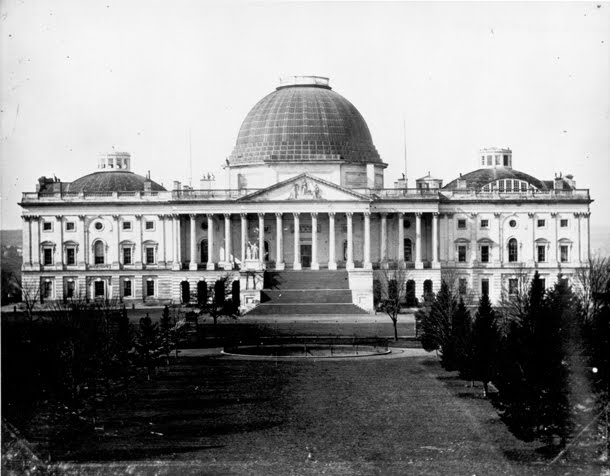
United States Capitol Building (1861)

United States Capitol Building (1861)

The Promised Land

The Promised Land

The United States Capitol Building

The United States Capitol Building

The Star Spangled Banner (1812)

The Star Spangled Banner (1812)

The United States Capitol Building

The United States Capitol Building

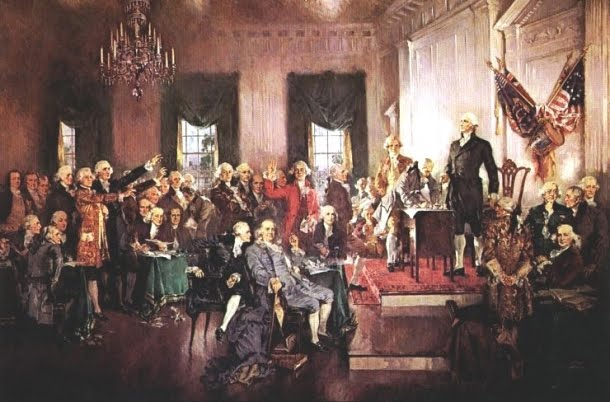
The Constitutional Convention

The Constitutional Convention

The Betsy Ross Flag

The Betsy Ross Flag

Washington at Valley Forge

Washington at Valley Forge

Washington at Valley Forge

Washington at Valley Forge

Washington at Valley Forge

Washington at Valley Forge

The Culpepper Flag

The Culpepper Flag

Battles of Lexington and Concord

Battles of Lexington and Concord

The Gadsden Flag

The Gadsden Flag

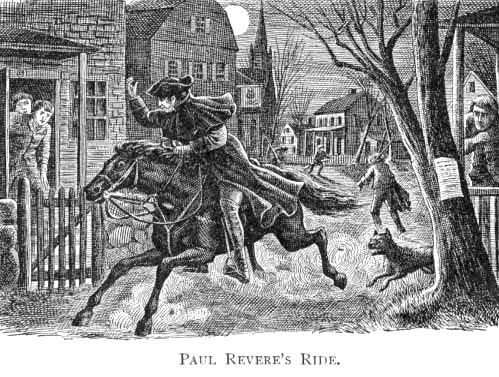
Paul Revere's Midnight Ride

Paul Revere's Midnight Ride

The Grand Union Flag (Continental Colors)

The Grand Union Flag (Continental Colors)

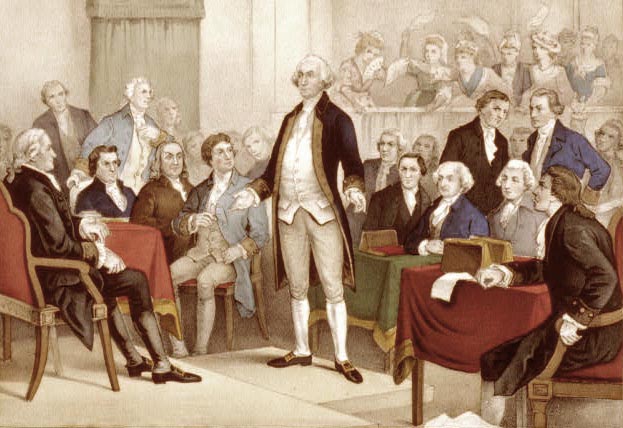
The Continental Congress

The Continental Congress

Sons of Liberty Flag (Version 2)

Sons of Liberty Flag (Version 2)

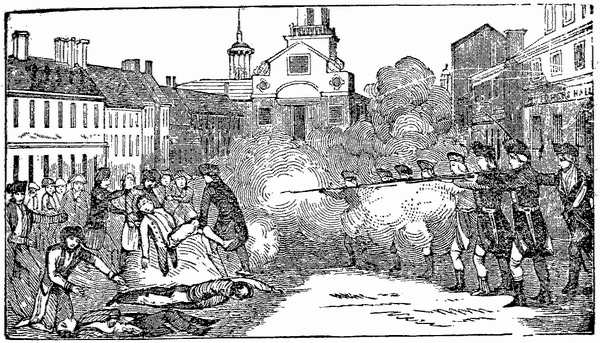
The Boston Massacre

The Boston Massacre

The Sons of Liberty Flag (Version 1)

The Sons of Liberty Flag (Version 1)

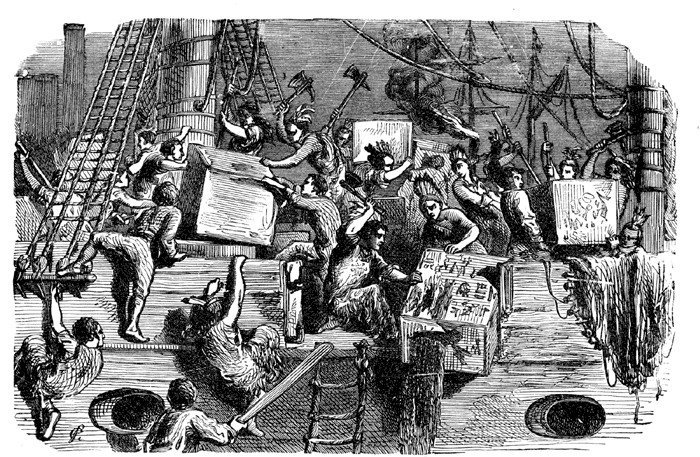
The Boston Tea Party

The Boston Tea Party

Friday, February 25, 2011

Tea Party Vision For Montana Raising Concerns For Democrat Governor

From Yahoo News and The Patriot Update:

Tea party vision for Mont. raising concerns


In US state houses, Tea Party bills spark outrage
.. AFP/Getty Images/File – A Tea Party activist prepares for a 'Get Out The Vote' rally in Philadelphia. A variety of Tea … .By MATT GOURAS, Associated Press Matt Gouras, Associated Press – Thu Feb 24, 5:13 pm ET

HELENA, Mont. – With each bill, newly elected tea party lawmakers are offering Montanans a vision of the future.


Their state would be a place where officials can ignore U.S. laws, force FBI agents to get a sheriff's OK before arresting anyone, ban abortions, limit sex education in schools and create armed citizen militias.


It's the tea party world. But not everyone is buying their vision.


Some residents, Democratic Gov. Brian Schweitzer and even some Republican lawmakers say the bills are making Montana into a laughingstock. And, they say, the push to nullify federal laws could be dangerous.


"We are the United States of America," said Schweitzer. "This talk of nullifying is pretty toxic talk. That led to the Civil War."


A tea party lawmaker said raising the specter of a civil war is plain old malarkey.


"Nullification is not about splitting this union apart," freshman Rep. Derek Skees said. "Nullification is just one more way for us to tell the federal government: 'That is not right."


Some of their bills are moving through the legislature. Others appear doomed: an armed citizen militia, FBI agents under the thumb of the sheriff and a declaration that global warming is good for business.


Whatever their merits, the ideas are increasingly popping up in legislatures across the nation, as a wave of tea party-backed conservatives push their anti-spending, anti-federal government agenda.


Arizona, Missouri and Tennessee are discussing the creation of a joint compact, like a treaty, opposing the 2010 health care law. Idaho is considering a plan to nullify it, as is Montana.


In Montana, the GOP gained a supermajority in the Montana House in last year's election, giving Republicans control of both legislative chambers. Half of the 68 House Republicans are freshman, many sympathetic to the new political movement.


Over the first 45 days of the new legislature, they have steadily pushed their proposals. Some have moved out of committee.


Examples include a bill making it illegal to enforce some federal gun laws in the state, and another aimed at establishing state authority over federal regulation of greenhouse gasses.


Schweitzer is watching, describing many of the proposals from the new majority as simply "kooky," such as a plan to make it legal to hunt big game with a spear.


Hardly a day goes by, however, that the merits of "nullification" aren't discussed.


Proponents draw on Thomas Jefferson's late 18th-century argument that aimed to give states the ultimate say in constitutional matters and let them ban certain federal laws in their borders.


Supporters are not dissuaded by the legal scholars who say the notion runs afoul of the clause in the U.S. Constitution that declares federal law "the supreme law of the land."


Backers of nullification say they can get the federal government to back down off a law if enough states band together against it.


They point to the REAL ID act — a Bush-era plan to assert federal control over state identifications as a way to combat terrorism. The law has been put in limbo after 25 states adopted legislation opposing it.


The nullification debate reached a fever pitch this week when tea party conservatives mustered enough votes in the House to pass a 17-point declaration of sovereignty.


"States retain the right of protecting all freedoms of individual persons from federal incursion," the measure in part reads. Now, it heads to the Senate, where ardent states' rights conservatives have less influence and its fate is less certain.


House Minority Leader Jon Sesso stood in the House Chamber, exasperated. He peppered Republicans with questions: Who decides if the federal government is acting unconstitutionally?


"Who among us is making these determinations that our freedoms are being lost?" he asked, an incredulous expression on his face as he eyed the Republican side of the chamber.


Republican Rep. Cleve Loney rose. A man of few words, the tea party organizer replied: "I don't intend us to secede from the union. But I will tell you it is up to us. We are the people to decide."


The political movement that caught Democrats by surprise at the ballot box also caught them flat-footed at the Legislature.


At first they rolled their eyes, but now they are quickly ramping up their opposition, even recycling a slogan once leveled by conservatives against liberals protesting the Vietnam War.


"I say to you: 'This is America: Love it or leave it,'" shouted Rep. William McChesney, during the sovereignty declaration debate.


Some Republicans have turned against the more aggressive tea party ideas.


"You are scaring the you-know-what out of them with this kind of talk," veteran Republican lawmaker Walt McNutt said. "This needs to stop and stop now. Stop scaring our constituents and stop letting us look like a bunch of buffoons."


Democrats are resigned to losing many of the votes and in some cases have urged Republicans to trot the ideas out for floor debates for the public to see. And surprised residents are taking notice, especially of the nullification push.


"It would be hard for anyone to top what is going on here in terms of the insanity of it all," said Lawrence Pettit, a retired university president and author living in Helena. "One could be amused by it, except it is too dangerous."


Schweitzer, meanwhile, is getting ready for the bills that may arrive on his desk. On Wednesday, he got a new cattle brand from the state livestock agency that reads "VETO." A branding iron is being made.


"Ain't nobody in the history of Montana has had so many danged ornery critters that needed branding," he said.


Internet Kill Switch: Mapping Out government's Proper Role In Cyber-Security

From The Heritage Foundation:

Internet "Kill Switch": Mapping Out Government’s Proper Role in CybersecurityPublished on February 22, 2011 by Paul Rosenzweig WebMemo #3166
Once again, Congress has begun consideration of a comprehensive cybersecurity bill. Most of the provisions of the bill that eventually emerges from Congress will be uncontroversially good—better education is never wrong.


But one aspect of the bill now making its way through the Senate deserves a great deal more public debate and consideration: the scope and extent of the government’s role in defending the Internet from external threats and, in particular, the extent to which the government can order private-sector actors to take action (including disconnecting from the Internet) in times of cyber emergency.


The Dangers of Government Overreach


When similar legislation was first introduced two years ago, the powers that were granted to the President were broad indeed—so broad that some dubbed those powers an “Internet kill switch” because of the effective power to turn off the Internet altogether.


The more recent proposals seem more circumspect. According to reports, the bill introduced last week by Senators Joe Lieberman (ID–CT), Susan Collins (R–ME), and Tom Carper (D–DE) will apply the President’s emergency powers only to critical infrastructure. The President would be given the power to “issue a declaration of a national cyberemergency.” After such a declaration the Department of Homeland Security (DHS) would be authorized to demand that critical companies “immediately comply with any emergency measure or action” decreed. Most notably, no “notice” would be required “before mandating any emergency measure or actions.” Furthermore, a company could be added to the “critical” infrastructure list one moment and ordered by DHS to “immediately comply” with its directives the next.


The Importance of Government Capacity


The problem is indeed a challenging one. Clearly, the federal government needs the ability to protect its own interests, some of which require use of the private-sector portions of the Internet. Likewise, the government is charged with providing “for the common defense,” and all Americans would expect it to play a role in defending, say, the West Coast electrical grid against a Chinese assault. The recent report of Chinese infiltration of Canadian government computers is a salient demonstration of the need for some defensive measures. And the reality is that if pre-enforcement judicial review of any governmental order is required, it is possible that the governmental response will be delayed so long that it proves ineffective.


But equally clearly, giving the government power over the private sector and the Internet is fraught with peril to civil liberties. Even though the legislation has explicit language denying presidential power to cut Americans off from the Internet generally (and even though any President of either party should not be presumed to exercise powers granted in a dictatorial way), the recent experiences in Egypt make it clear how relatively easy it is for an autocratically minded leader to take control of private conduct. And even when government acts with good intent, mistakes happen—for example, the recent error in which DHS mistakenly seized a number of innocent domain names that it thought were tied to child pornography but were not. Post-enforcement judicial review is of less value after the order has already been given and implemented.


Balance of Power


So this challenge is not readily susceptible to a rote answer based on ideology. To be sure, conservative principles generally favor private-sector action over governmental control, but they do not answer the narrower question of when the government should, in an emergency, have the power to step in and override the private sector’s actions.


In the end, however, the balance should be struck against excessive governmental power, not out of fear of its abuse but rather because the premise of the requested authority lies in a false assumption about the rapidity with which a response will be required. When a cyber attack is perceived to occur at the pace of milliseconds, it may be that the deterrent or defensive response will need to occur with equal rapidity. But this is so fast that governmental action, if it is to be effective at all, may need to proceed without even the time for the presidential declaration and DHS action that is contemplated by the draft legislation. Rather, it is possible (indeed, likely) that some subordinate commanding officer may feel compelled (and authorized) to act without higher authorization if the commander perceives that a cyber attack has begun. And what is true for the military may also be true of private actors who are protecting their own networks—they may feel the need to act instantaneously without the benefit of reflection.


This perception of the need for rapidity reflects a sea-change in concept. The physics of the Internet destroys time and space.[1] Even in the nuclear domain, the imminence of the threat was measured in minutes, allowing the development of processes (like the classic nuclear code “football”) that permitted a considered, albeit hurried, human response. The cyber domain is often characterized as one in which a near-instantaneous response is necessary.


That characterization may not, however, be accurate, and its prevalence may actually be pernicious. A counter-response may be essential immediately as a purely defensive measure, but it is likely that a deterrence-based cyber response can be delayed without significant cost. As Martin Libicki pointed out in a recent RAND study, a cyber response is unlikely to be able to disable a cyber attacker completely. As a consequence, for deterrence policy, more important than the speed of the response “is the ability to convince the attacker not to try again. Ironically, for a medium that supposedly conducts its business at warp speed, the urgency of retaliation is governed by the capacity of the human mind to be convinced, not the need to disable the attacking computer before it strikes again.”[2]


Be Leery


And if that is the case, if cyber deterrence is less dependent on the quickness of a response than on its certainty, then the argument for strong presidential authority is appreciably diminished. To be sure, this is not an area where one can express a policy judgment with a degree of certainty, but based on what is known today, policymakers should be very leery of any proposal that grants the President plenary authority over the Internet.


Paul Rosenzweig is Visiting Fellow in the Center for Legal & Judicial Studies and the Douglas and Sarah Allison Center for Foreign Policy Studies, a division of the Kathryn and Shelby Cullom Davis Institute for International Studies, at The Heritage Foundation.


Send this report to a friendYour Information Yes, I'd like to receive news about Heritage via email Your Friend's Information Your Message

Show references in this report


--------------------------------------------------------------------------------


[1]Paul Rosenzweig, “10 Conservative Principles for Cybersecurity Policy,” Heritage Foundation Backgrounder No. 2513, January 31, 2011, at http://www.heritage.org/Research/Reports/2011/01/10-Conservative-Principles-for-Cybersecurity-Policy.


[2]Martin C. Libicki, Cyberdeterrence and Cyberwar (Santa Monica, CA: RAND Corporation, 2009), p. 62 (emphasis added).


About the Author Paul Rosenzweig

Visiting Fellow, Center for Legal and Judicial Studies and Douglas and Sarah Allison Center for Foreign Policy Studies


Is the President Above The Law?

From Judicial Watch:

From the Desk of Judicial Watch President Tom Fitton:


Is the President Above the Law?


This is the uncomfortable question many Americans are asking after President Obama’s lawless decision to stop defending in federal court the law of the land on the institution of marriage.


According to The Washington Post:


The Obama administration said Wednesday that it will no longer defend the federal law that bans the recognition of same-sex marriage because it considers the legislation unconstitutional, a sudden and rare reversal.


Gay rights groups hailed the administration's move, saying it will bolster their argument that laws that apply a different standard to people based on sexual orientation are unconstitutional. At least three challenges to the Defense of Marriage Act are working their way through the federal courts.


The law in question is the Defense of Marriage Act, which breezed through Congress with a vote of 85–14 in the Senate and a vote of 342–67 in the House before being signed into law by President Clinton on September 21, 1996. It has been the law of the land now for almost 15 years, but, perhaps, not anymore. President Obama and his pliant henchman Attorney General Eric Holder thought it was more important to throw a bone to their leftist supporters than to enforce the laws of the land—again. (Sure enough, the Post story linked above details how Valerie Jarrett, Obama’s White House liaison to the homosexual lobby, was involved in this decision!) In fact, the administration has already defended this law’s constitutionality in court and is now changing its position mid-stream. You can view Holder’s dishonest letter announcing the executive override of federal law here.


Obama’s decision is highly irregular and raises serious questions as to whether President Obama and Holder are upholding their oaths and following the Constitution’s demand to “take care that the laws be faithfully executed.” Has the president now substituted himself for both the Congress and Supreme Court? Is this the end result of his dubious czar appointments: that he has, in effect, appointed himself “Constitution Czar?” In one move, Obama would override the Constitution and redefine marriage! In Clintonian fashion, Obama will continue to enforce a law he thinks (and is now telling federal courts throughout the land) has no constitutional basis.


The implications of President Obama’s abuse of office are still rippling and unknown. Does it mean that gay marriage will now be recognized in all the states (despite the 30 state constitutions that ban it)? What about the tax code and other federal regulations related to marital status, which under DOMA, cannot be extended to same-sex “marriages?” The homosexual lobby says that there are 1,138 of them. Has Obama’s dictate changed all that law, including the tax code? Though, supposedly, Congress (or, at least, the House) may step in to defend the law, I would worry about a federal judge or two summarily ruling that “gay marriage” is the law of the land rather quickly.


Now let’s talk about the disgrace that is Attorney General Eric Holder. From day one, Judicial Watch vigorously opposed the Holder nomination due to his corrupt record in the Clinton administration as a Deputy Attorney General under Janet Reno. I knew Holder would be a disaster as Attorney General. But even I could not have predicted just how bad the situation would get on his watch. Just take a moment to review Holder’s record so far:


Judicial Watch uncovered explosive evidence that top political appointees at Holder’s Justice Department were intimately involved in the decision to dismiss the voter intimidation case against the New Black Panther Party for Self Defense, a “civil rights” group that brandished weapons, blocked a polling station and hurled racial insults at voters on Election Day 2008. These documents, which include internal DOJ email correspondence, directly contradict sworn testimony by Thomas Perez, Assistant Attorney General for the Civil Rights Division, who testified before the U.S. Commission on Civil Rights that no political leadership was involved in the decision.


During the course of a year-long investigation of the Black Panther scandal, the U.S. Commission on Civil Rights made startling accusations of racism at Holder’s Justice Department, a charge corroborated by Justice Attorney Christopher Coates. (Read more here.)


While failing to protect the country from the scourge of rampant illegal immigration, the Holder Justice Department made matters worse by suing the State of Arizona for implementing a new get-tough illegal immigration law, S.B. 1070. Judicial Watch represents Arizona State Senate President Russell Pearce, the author of S.B. 1070, and the entire Arizona Legislature against this shameless legal assault by Holder’s Justice Department.

Judicial Watch recently received documents from the Department of Justice that show Holder’s DOJ worked hand-in-hand with the radical leftist ACLU in mounting their respective legal challenges to SB 1070. (In one email exchange uncovered by Judicial Watch, a Justice Department official expressed joy at “being on the same side” with the ACLU.) The Justice Department is supposed to be an independent law enforcement agency, not a mouthpiece for the radical left.

Just one week after suing Arizona, Holder’s Justice Department announced it would not prosecute sanctuary cities who flout federal immigration laws.

To this day, Eric Holder refuses to initiate any investigation of the corrupt enterprise known as ACORN, despite the organization’s long, sordid history of election fraud. In fact, while noting that ACORN had engaged in “questionable hiring and training practices,” Holder’s Justice Department actually closed down one ACORN investigation in March 2009, claiming ACORN broke no laws. Meanwhile, the organization, now splintered into corrupt cells across the country, continues to violate the law. Holder’s unwillingness to prosecute ACORN calls into question his impartiality, considering the fact that President Obama previously worked with the organization.

Holder’s record on national security is abysmal. Not only is Holder leading the Obama administration’s ridiculous on-again, off-again campaign to close Guantanamo Bay, but it was Attorney General Holder who made the disastrous initial decision to grant a civilian criminal trial to 9/11 terrorist mastermind Khalid Sheikh Mohammed (KSM) and other 9/11 terrorists in New York City. That decision prompted a massive public backlash and the plan was scrapped, at least temporarily. As CNN pointed out just last week, Holder has still not told the American people of his final plan to hold 9/11 terrorists and how they will be brought to justice. I suspect, however, it will not be the justice they deserve. According to press reports, at least seven attorneys inside Holder’s Justice Department previously represented terrorist suspects in court. (They are known as the Al Qaida 7. And Holder and his law firm also advocated for terrorists before his appointment to lead Justice.)

And if all of this isn’t enough evidence of Holder’s corruption, political hackery and incompetence, Fox News has its own expanded list of Holder’s greatest hits. This week’s latest assault on the rule of law lends further support to Judicial Watch’s effort to “Dump Holder.” America needs an Attorney General who will defend the constitutional order and not be a political, personal lawyer for a president who seems to know no constitutional restraints on his power.


The Next Step In Congress' Fight For Marriage

From The Heritage Foundation:

Morning Bell: Next Step in Congress’ Fight for Marriage


Posted February 25th, 2011 at 9:20am in Family and Religion, Rule of Law with 58 comments Print This Post

This Wednesday, Attorney General Eric Holder sent his own version of a “Dear John” letter to the Speaker of the House, informing him that President Barack Obama’s Justice Department will no longer defend the Defense of Marriage Act (DOMA) in federal court. The letter clearly states that the decision was personally made by the President himself, who, supposedly just this week, came to the conclusion that DOMA violates “the equal protection component of the Fifth Amendment” of the U.S Constitution. This purely partisan act is completely consistent with both President Obama’s unprecedented politicization of the Justice Department and the same-sex marriage movement’s end-run around for democracy.


DOMA was enacted by overwhelming majorities of both houses of Congress and signed into law by President Bill Clinton in 1996. DOMA has two core provisions. First, it defines the words marriage, spouse, husband, and wife wherever they appear in the U.S. Code as referring only to the union of a man or a woman. Second, it defends the right of each state not to be forced to accept the redefinition of marriage in a handful of other states as a result of state court decisions or laws. Nearly 40 states have enacted state-level DOMAs, and 31 have embraced traditional marriage in their state constitutions. No state’s voters have ever voted to the contrary.

President Obama knows all of this. He also knows that his Administration’s litany of failures (unemployment above 8 percent, Guantanamo still open, exploding debt, etc.) has weakened him politically. By now asserting that there is no rational case for defending marriage as the union of one man and one woman, President Obama is echoing the claims of same-sex marriage advocated who portray the defenders of traditional marriage as irrational and bigoted. Nothing could be further from the truth. As Heritage Foundation Senior Research Fellow Chuck Donovan explains, defense of traditional marriage is not only rational but a cornerstone of civil society:


Marriage is the cornerstone in an archway of values that form the constitution of the family and the foundation of civil society. To its advocates as an institution with a pre-political meaning, it is not an entity created by the state but rather one recognized by the state. It is not about one family, but the coming together of two families, whose role in begetting and bearing children make them not merely part of a community but the creators of community. The community they create is not time-bound, but existing across generations. … What is at stake is the whole task of society to ensure that as many children as possible are raised by their mothers and fathers.


There is one silver lining in the President’s decision to call the vast majority of Americans who believe in traditional marriage bigots: Congress now has the opportunity to offer a real defense of marriage in court. Up to this date, the Obama Administration’s fraudulent defense of DOMA in federal court has been characterized by even supporters of same-sex marriage as “collusive litigation.” Congress should defend its rights as a co-equal branch of government under the United States Constitution and fight for marriage.


This does not mean that Congress needs to vote on DOMA again. DOMA is still good law. It does mean that Congress needs to act to make sure DOMA has effective and aggressive defense in court. Members of Congress, should seek to intervene in the case to assure that DOMA gets the vigorous defense that should be afforded to all federal statutes for which reasonable legal arguments may be offered—and that the President is refusing to provide.


Quick Hits:


•The Wisconsin Assembly approved Gov. Walker’s plan to curb union power last night, but Senate Democrats are still on the run.

•The Wisconsin Education Association was the highest spending lobby organization in Wisconsin in 2009, spending more than double their nearest competitor did.

•The United Federation of Teachers spent millions on dinners, parties, parking, and coffee as thousands of teachers were laid off.

•Freddie Mac and Fannie Mae requested another $3.1 billion bailout yesterday.

•According to the Congressional Budget Office President Obama’s failed stimulus spent a minimum an average of $228,055 for each job it saved or created.

It's Time To Fight: Alliance Defense Fund Speaks Out On USDOJ Refusal To Protect Law

From The Chuck Colson Center:

It's Time To Fight - Alliance Defense Fund speaks out on USDOJ refusal to protect law.


By: Alan Sears, President ADF
Published: February 24, 2011 5:43 PM

Topics: Chuck Colson, Marriage & Family, Politics & Government, Worldview


Alan Sears of ADF has just released a letter on the implications of the Obama Administration and Justice Department's refusal to defend existing Defence of Marriage Act (1996) legislation:


______________________________________________


Alliance Defense Fund

Update on federal DOMA Litigation


It’s time to fight…


We wanted to update you on the litigation involving the Defense of Marriage Act (DOMA – which essentially is the law that defines marriage to include one man and one woman for federal government purposes, and allows each state to define marriage without imposing any re-definition on another), and especially the impact of Eric Holder’s unprecedented announcement yesterday that the Department of Justice will no longer defend the law (and in fact actively oppose it).


As you know, the Attorney General’s announcement only confirms what has been a reality since the Administration began “defending” DOMA in the seven jurisdictions in which it is currently being challenged. It’s no exaggeration to say that the President’s team has been throwing the cases. The Administration has expressly waived advancing winning legal arguments and intentionally failed to cite binding legal precedent in each case. In fact, the Administration has “expressly disavowed” the winning legal arguments that the Bush Administration had made in previous cases. In short, it is clear that the President and his lawyers have been actively sabotaging DOMA in court.


That is why we have put so many resources into DOMA’s defense. There are two cases in California, two cases in Massachusetts, and cases in Oklahoma, Connecticut, and New York. The cases from Massachusetts are currently at the First Circuit Court of Appeals. ADF and its allies filed amicus briefs in those cases, which resulted in 15 briefs being filed in the case that covered every single legal argument that the United States Department of Justice had abandoned. The Alliance Defense Fund filed a brief on behalf of Representative Lamar Smith, who is the Chairman of the House Judiciary Committee, presenting the court with the winning arguments that have been recognized by every other case upholding the definition of marriage. We also represent the state defendant in the Oklahoma case to defend both Oklahoma’s constitutional amendment defining marriage and DOMA. The other DOMA cases are in their beginning stages where we are preparing the same defense of DOMA that we mounted in the First Circuit Court of Appeals.


We are also advising members of Congress on their right to intervene in light of Department of Justice’s complete abdication of its duty to defend the law enacted overwhelmingly by both Houses of Congress. The good news is that the Attorney General’s announcement paves the way for the House of Representatives intervention so that the federal law can be vigorously defended by an official party. We are encouraging Congress to step forward to fill the void left by the Administration and we are offering to help any way we can.


It’s an outrage that the President and his Attorney General would not only fail to defend the law, but actively side with those who seek to redefine marriage and label the majority of Americans as the equivalent of bigots motivated by “animus” for believing marriage is the union of one man and one woman. (After all, not only have 30 state marriage amendments been passed by usually overwhelming margins across the country, DOMA was passed in the House of Representatives by a bi-partisan vote of 342-67, and in the Senate 85-14 and signed into law by then President Bill Clinton). But this Administration has made no secret about what it thinks when religious liberty collides with those who seek to redefine marriage. As the President’s pick as head of the EEOC said, “…we should similarly not tolerate private beliefs about sexual orientation and gender identity that adversely affect LGBT [lesbian, gay, bisexual, and transgender] people,” “it’s a zero-sum game.”

The Alliance Defense Fund Marriage Team has kept the threat to marriage and religious freedom at the forefront of our minds as we have been working around the clock to litigate these cases. We ask for much prayer, for Congress to act, and the Courts to follow the law and Constitution. It is time to fight…


Thank you VERY much. John 15:5

Yours for religious freedom in America, with sincere appreciation and best regards,


Alan E. Sears

President, CEO and General Counsel

ALLIANCE DEFENSE FUND


Thursday, February 24, 2011

Defense Of Marriage Act, ObamaCare And Kagan

From Red State:

Defense of Marriage Act, ObamaCare and Kagan


Posted by Curt Levey (Profile)


Wednesday, February 23rd at 8:37PM EST


50 Comments

President Obama’s decision today to abandon the Defense of Marriage Act (DOMA) is both outrageous—as a matter of Justice Department policy and constitutional law—and a miscalculation that will decreases the chances of ObamaCare being implemented, while potentially increasing calls for Supreme Court Justice Kagan to recuse herself from certain gay rights cases.


The President’s refusal to defend DOMA, a federal statute enacted by overwhelming margins in the Senate (85 - 14) and House (342 - 67) and signed into law by President Clinton, flies in the face of Justice Department policy and principles of democratic government. It has long been the Department’s policy to defend any challenged federal statute unless no plausible argument can be made in its defense. By ignoring that policy, President Obama is engaging in a disturbing power grab that, if taken to its logical conclusion, would allow him to undermine any duly enacted federal law that he doesn’t personally agree with.


But that’s not the worst of this power grab. In announcing the President’s decision, Attorney General Holder informed the nation that “the president has concluded that … sexual orientation should be subject to a more heightened standard of [constitutional] scrutiny.” In layman’s terms, that means that President Obama has decided that the Fourteenth Amendment’s Equal Protection Clause prohibits distinctions based on sexual orientation in the same way that it prohibits racial discrimination.


Of course, the authors of the Fourteenth Amendment would be quite surprised to learn that they had made same-sex marriage a constitutional imperative. However, even putting originalism and strict construction aside, it was heretofore accepted that only the judicial branch—particularly the Supreme Court—has the authority to determine the appropriate level of Fourteenth Amendment scrutiny and whether a particular piece of legislation meets that level of scrutiny.


Apparently, President Obama has now taken that authority upon himself. And this from an Administration that was outraged that Congressmen were even discussing the proper interpretation of the Fourteenth Amendment provision dealing with birthright citizenship.


This is not the first time that President Obama has shown he is willing to do an end run around the other branches of government in pursuit of his political agenda. His use of White House czars to circumvent the Senate confirmation process and of the EPA to circumvent legislative resistance to cap and trade should have forewarned us that he would attempt today’s end run around the judicial system.


Even if today’s end run succeeds, President Obama may come to regret it should he fail to win reelection. In that case, it will be up to a Republican president to defend ObamaCare against current and future constitutional challenges. Obama has just handed his successor a perfect excuse to effectively repeal or cripple ObamaCare by refusing to defend it in court.


Even in the short term, the President has strengthened the hand of ObamaCare opponents, particularly the many states that question its constitutionality and plan to resist its implementation. After abandoning DOMA, Obama has no moral authority to argue that, because ObamaCare is the law of the land, all government officials must enforce it unless and until the Supreme Court decides it’s unconstitutional.


Finally, even the President’s critics will concede that his conclusion about the proper level of constitutional scrutiny for sexual orientation—whether right or wrong—must have been based on legal research and analysis rather than just a sudden political whim. If so, Obama and Holder surely consulted the nation’s Solicitor General—the government’s top constitutional attorney—when conducting this important legal analysis. As a result, the Administration will be called upon to disclose whether Elena Kagan was still Solicitor General when this consultation began.


If the answer is yes and Kagan was involved in determining the federal government’s official position on the proper scrutiny for sexual orientation, it opens up an ethical can of worms for her concerning Supreme Court cases in which that standard is at issue. It’s a can of worms that Obama may come to regret.


Cross-posted at the Committee for Justice blog

It's Not Its Business

From The American Spectator:

The Marital Spectator


It's Not Its Business

By Aaron Goldstein on 2.24.11 @ 6:07AM


After spending its first two years (and change) in office arguing in federal court in favor of the Defense of Marriage Act (DOMA), the Obama Administration abruptly did an about face and announced it will no longer do so. To be precise, Attorney General Eric Holder advised Congress that the Department of Justice will not defend Section 3 of DOMA, which defines marriage as "a legal union between one man and one woman as husband and wife."


Although the federal government will no longer defend DOMA in court, Holder noted the law will continue to be enforced until either a higher court strikes it down or it is repealed by Congress. California Democratic Senator Dianne Feinstein is planning to introduce legislation to do just that. If Feinstein is successful in getting repeal legislation passed through Congress, it could prompt House Republicans to introduce either a new version of DOMA or it could also re-ignite efforts to amend the Constitution with a Federal Marriage Amendment. Either way the culture war is far from ending in a truce, especially now that President Obama has placed himself at the center of it. Some might say he has placed himself well to its left.


I agree with Ed Morrissey when he states that President Obama "has finally realized that his allies are thinning, and he figures that he needs to start pandering to those still on his side. It could certainly help distract from the budget fight, if Republicans take the bait." And no doubt there are some Republicans who will bite. Now one can take the Obama Administration to task for both a lack of consistency in this matter and for its political motivations. Nevertheless I think it has made the right decision even if it was made for all the wrong reasons. My argument is twofold.


First of all, why is the federal government in the business of defending marriage? Bob Barr, the former Georgia Republican Congressman who ran for President in 2008 on the Libertarian Party ticket and the man who introduced DOMA in 1996, would eventually publicly come out against his own legislative creation. In an op-ed published in the Los Angeles Times in January 2009, Barr wrote:


Even more so now than in 1996, I believe we need to reduce federal power over the lives of the citizenry and over the prerogatives of the states. It truly is time to get the federal government out of the marriage business. In law and policy, such decisions should be left to the people themselves.


Whether you believe in the traditional definition of marriage or whether you believe that marriage should be broadened to include same-sex couples, it is a question that ought to be settled at a local, county, and state level. If Maryland's legislature decides to recognize same-sex marriage then fine. If voters in Maine decide in favor of traditional marriage then also fine.


Secondly, I am not making the argument that marriage isn't worthy of defense. What I am arguing though is that if one does defend the institution of marriage, then one must bear in mind that matrimony is only as good as the two people who enter into it. As with any contract (and that's what marriage is), there is no guarantee the two parties will be the better for it and in this day and age it is far less difficult for one or both parties to extricate themselves from such an agreement if there is no agreement to be had.


It is thus entirely possible that a couple of the same sex might very well be better suited to marriage than a couple of the opposite sex. Undoubtedly, there are many who would consider such a notion abhorrent and blasphemous. But Congress cannot legislate morality. Government cannot make you a good person. Marriage and family are important parts of our lives. Perhaps even the most important part of our lives. As such it is a part of our lives far too important to be left to the whims of Washington.


Letter to the Editor


Aaron Goldstein writes from Boston, Massachusetts.